
Getting Maui County Court Records
The fastest route runs through eCourt Kōkua, and searching it costs nothing. Open the case. Click Dockets. A PDF icon beside an entry means one thing: you can buy a file-stamped regular copy or an electronically certified one right there. No icon? Use a free public terminal, call the right clerk, or send Second Circuit Form 2D-P-332.
At Hoapili Hale, Legal Documents handles nonconfidential Circuit criminal and civil files plus the centralized copy process. District and Family clerks keep their own files. Under the Hawaiʻi Court Records Rules, a request can be oral, written, or electronic. It just has to name a party, a known case number, the case type, and the filing court. Mail, fax, and in-person channels are all documented. Skip advance payment when you mail the form; the office invoices copy, postage, and handling charges instead.
- Find the Case ID and exact docket entry in eCourt.
- Buy the PDF if a document icon appears.
- If it does not, call the custodian or inspect the courthouse terminal.
- Use Form 2D-P-332 for selected documents, certification, old media, or off-site files.
- Wait for the invoice, then pay by an approved method.
Hoapili Hale Records Hub
Hoapili Hale sits at 2145 Main Street, Suite 106, Wailuku, HI 96793-1679, and it serves as the practical hub for Maui County records. Counters and terminals run 8 a.m. to 4 p.m. on weekdays, closed state holidays. Legal Documents answers at 808-244-2969, with a records fax of 808-244-2932. District clerks sit at 808-244-2846; Family clerks at 808-244-2700.
The statewide public-terminal directory shows Hoapili Hale managing Second Circuit case files, including matters heard in Lahaina, Hāna, Molokaʻi, and Lānaʻi.
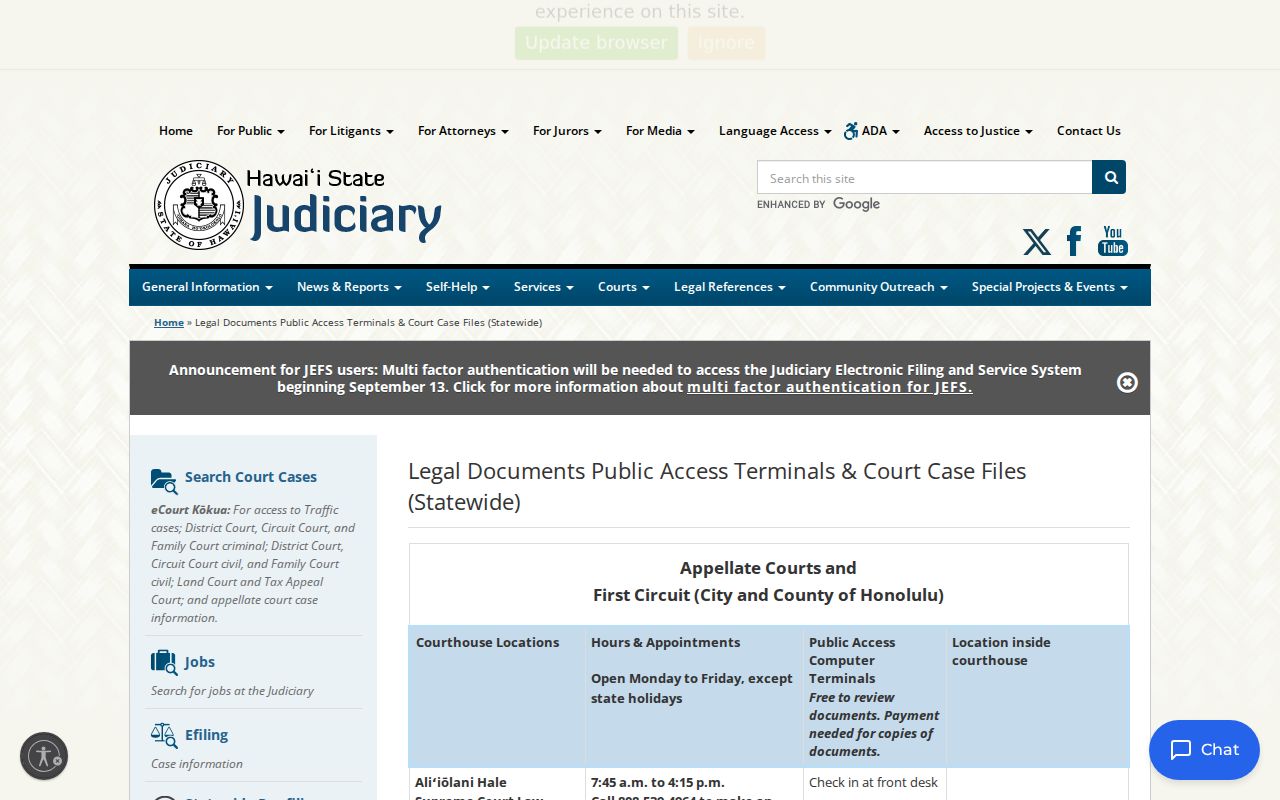
That official access page makes a local point worth remembering: the courthouse where a Maui County matter is heard and the room holding its file may not be the same place. Check the directory before you travel.
Second Circuit Legal Documents
2145 Main Street, Suite 106
Wailuku, HI 96793-1679
808-244-2969
Court Record Types
Think of a docket as the chronological index. Behind each entry sits a document, perhaps a complaint, motion, minute, order, judgment, or exhibit. A plain copy just reproduces the paper. Certification is different; the clerk's seal and formal certification under HRS §606-3 turn it into a certified copy, while an exemplified copy adds an even higher form of authentication. Transcripts and audio travel separate routes entirely.
- Circuit Court felony, jury, major civil, probate, and guardianship files
- District Court misdemeanor, traffic, landlord-tenant, small-claims, and limited-civil files
- Family Court domestic and child-related files, subject to strong access limits
- Paper, microfilm, off-site, electronic, audio, certified, and exemplified copies
- Court reporter transcripts requested through the reporter rather than ordinary copy service
Court Reporters takes transcript calls at 808-244-2986. For audio or video, use Form 2F-P-509. Asking for "all documents" can cost more and slow you down, so key your list to exact docket dates.
Maui County Form 2D-P-332
Form 2D-P-332 exists for records you cannot buy through an online icon. It captures your name and phone, plus the case type and number. You also give an identification type, party names, and whether you are a party, lawyer, or nonparty. Service boxes cover inspection, clerk search, all papers, selected papers, or another need. Ten rows leave room for a title, filing date, plain-copy count, and certified-copy count.
Written requests move through in receipt order. Give the office at least ten business days. Expect 15 to 20 business days for mailed work. Multiple files, microfilm, and off-site boxes take longer still. Under HCRR Rule 10.10, access that cannot be supplied within ten business days calls for notice or an estimate.
Make the request precise. Supply the exact Case ID, document title, filing date, and desired certification so the Second Circuit clerk can identify the record without a paid name search.
Inside Maui County Court Records
In eCourt, the Summary tab gives the Case ID, type, status, last update, filing date, court, location, related matters, parties, and bail or bond when relevant. Case Parties shows each party's sequence, association, expiration date, type, ID, name, and aliases. Events lists hearings and dispositions, newest first. Dockets holds the minutes, filings, and court actions. Criminal cases add an Offenses tab.
| Docket | Chronological index of documents and proceedings |
|---|---|
| Summary | Identity, status, court, dates, location, and related cases |
| Events | Past and future settings in reverse chronology |
| Dockets tab | Dated entries, minutes, and purchasable PDF icons |
| Filed document | The complaint, motion, order, judgment, or other paper behind an entry |
You cannot purchase a masked sealed or in-camera entry. Yet an unmasked line without a PDF icon may still be public at the counter. The icon signals online availability, not legal access status.
Maui County PDF Purchase Window
A regular file-stamped PDF runs $3 per document or ten cents per page, whichever is greater. Electronic certification adds $2. Retrieval works through your emailed Purchase ID and email address, but access lasts just two days. Save the file right away.
The Judiciary filing page draws a clear line. JEFS serves registered parties and counsel for filing and service. Public purchasers use eCourt. Parties and counsel with active-case JEFS access can view documents through Manage My Cases or Firm Cases without the public purchase charge.
Note: PDF purchases are nonrefundable. Verify the Maui County Case ID and docket date before you complete the cart.
Fees and Certified Copies
Second Circuit paper fees come from a local schedule. They differ from current portal prices. A paper or docket-index copy costs $1 for the first page of each document. Each added page is 50 cents. Microfilm runs $1 per page plus a $5 case-record service charge. Certification adds $2 per document, exemplification $4, and notary authentication $3.
| Service | Published charge |
|---|---|
| Paper copy or docket index | $1 first page; $0.50 each additional page |
| Microfilm | $1 per page plus $5 case service |
| Certification / exemplification | $2 / $4 per document |
| Off-site retrieval | $5 per case record or box |
| Electronic or audio-tape copy | $10 per document or tape |
| Rush service | $10 plus other charges |
A missing case number can trigger a $5 exact-name search, which generally covers 1984 forward. After invoicing, written-request prepayment goes by money order, cashier's check, or certified check. Fees can change, so pick your channel and confirm the current amount.
Maui County Files Over Five Years
Old Maui County files need extra planning. A court docket more than five years old may sit in off-site storage. Call Legal Documents before you travel. Staff will say whether retrieval is needed and which office should receive the form. Some rural forms still point mail to Lahaina, while others say Room 106 in Wailuku, so the address on a stale form can mislead you.
Microfilm carries a page charge plus a service fee. Retrieval from storage carries a per-case or per-box charge. Big requests take longer. Bring a modern Case ID, the old number if it differs, party names, court type, and a short list of filing dates.
Sealed Records and Public Access
Court files answer to the Hawaiʻi Court Records Rules. An ordinary county public-record request does not control them. HCRR Rule 10 permits access during business hours unless law, rule, or order restricts it, and Rule 9 requires filers to isolate protected personal and account data on a confidential form. HRS §92F-13 offers government-record exceptions, yet it cannot displace the HCRR. The official HRS §92F-13 text spells out those exceptions.
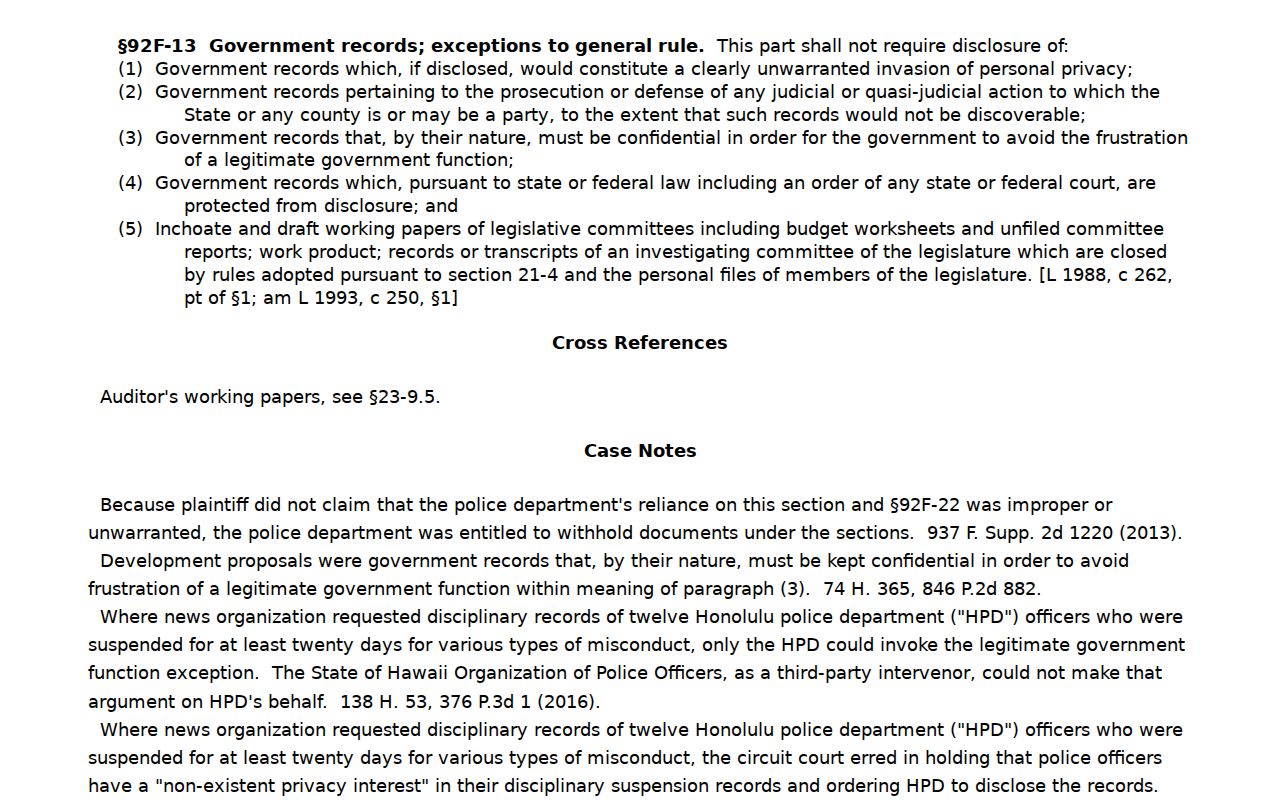
It separates government records from HCRR court files.
Key access rules: Confidential, juvenile, adoption, sealed, and in-camera material is withheld or masked. Other public documents may be offline without being sealed.
Maui County Juvenile Record Limits
HRS §571-84 seals juvenile dockets except through authorized access.
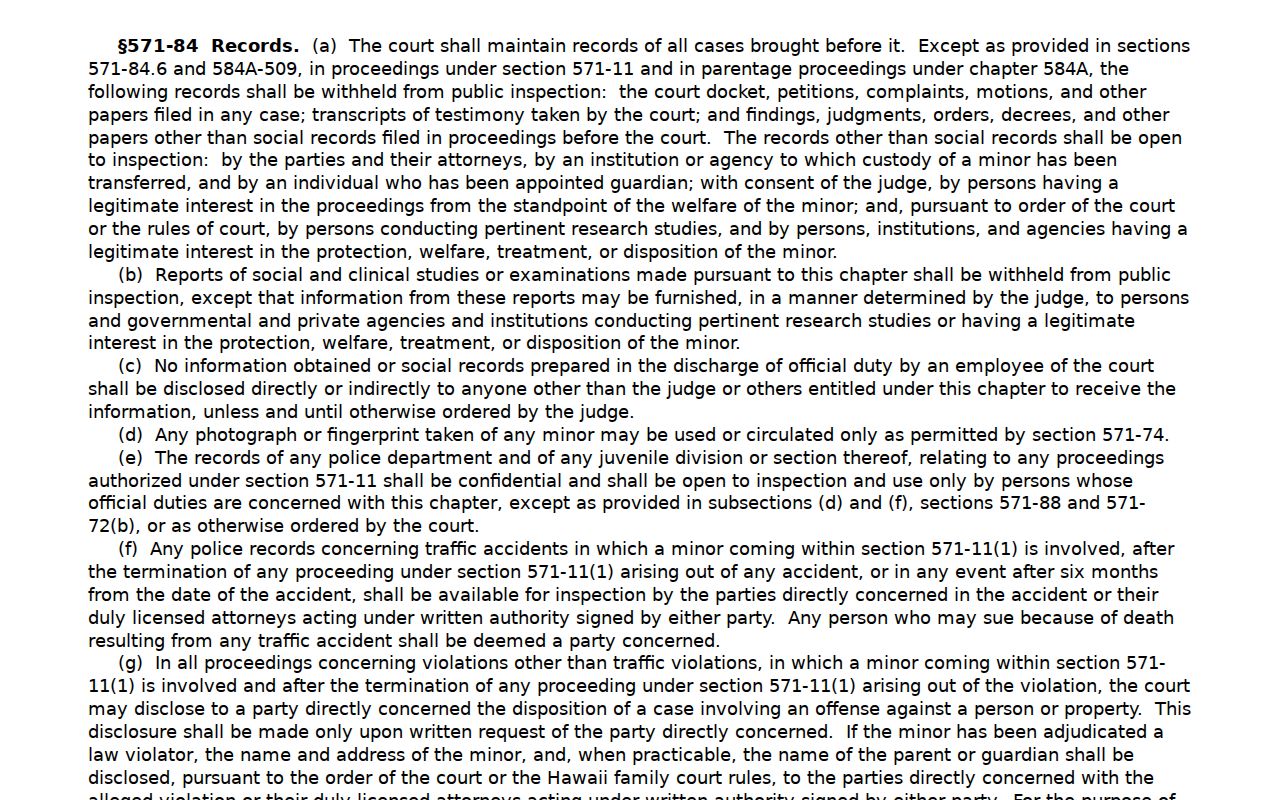
That statute explains why a juvenile Maui County court record skips the usual public lookup. HCRR Rule 10.4 limits confidential material to Judiciary staff performing duties, counsel, parties, and authorized providers. Another rule or court order can open the door. Everyone else generally needs court authority after a denial.
Maui County Adoption Files
HRS §578-15 restricts adoption proceedings and later seals them, subject to statutory access routes.
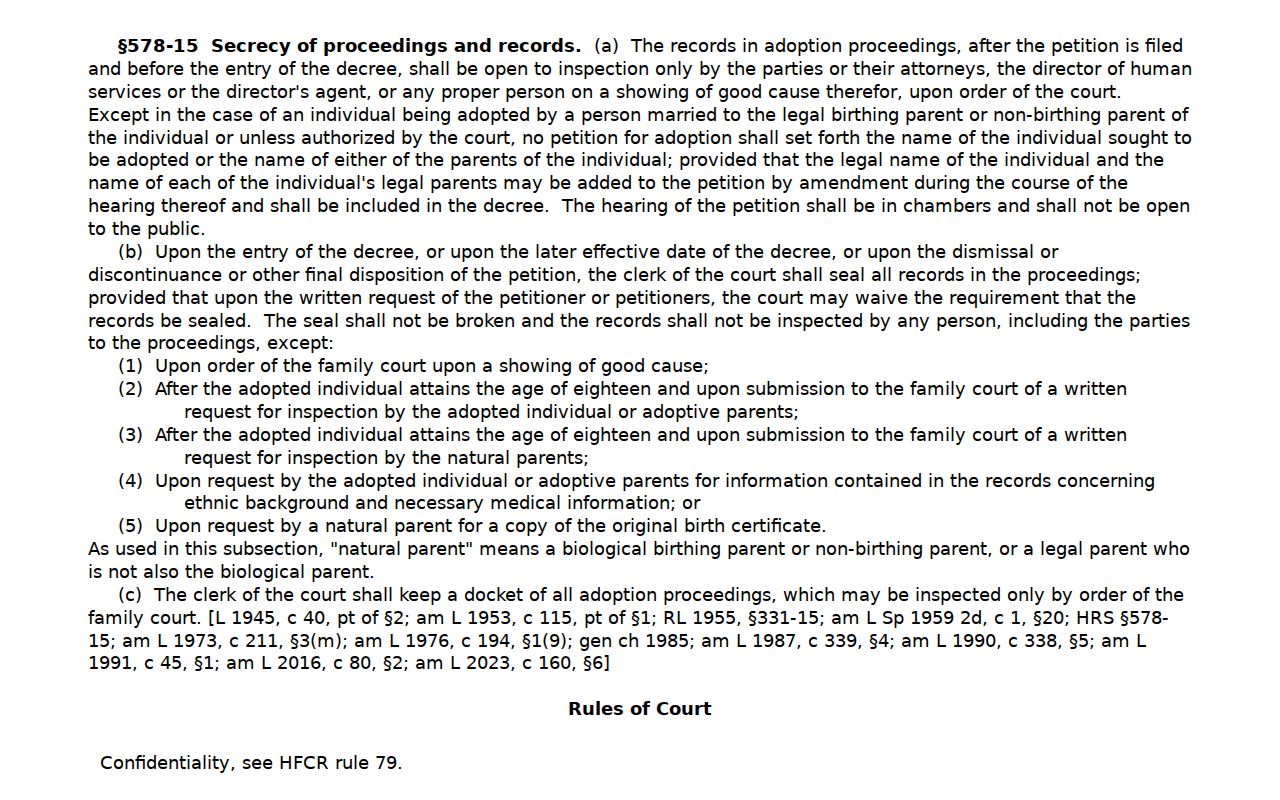
An adoption search is not a hunt for a missing public PDF. A qualifying expungement under HRS §831-3.2 can strip covered information from public Judiciary databases. Dismissal alone does not guarantee removal. The clerk can explain procedure for any restricted category. No clerk can waive a sealing order or statute.