
Maui County Traffic Court Records
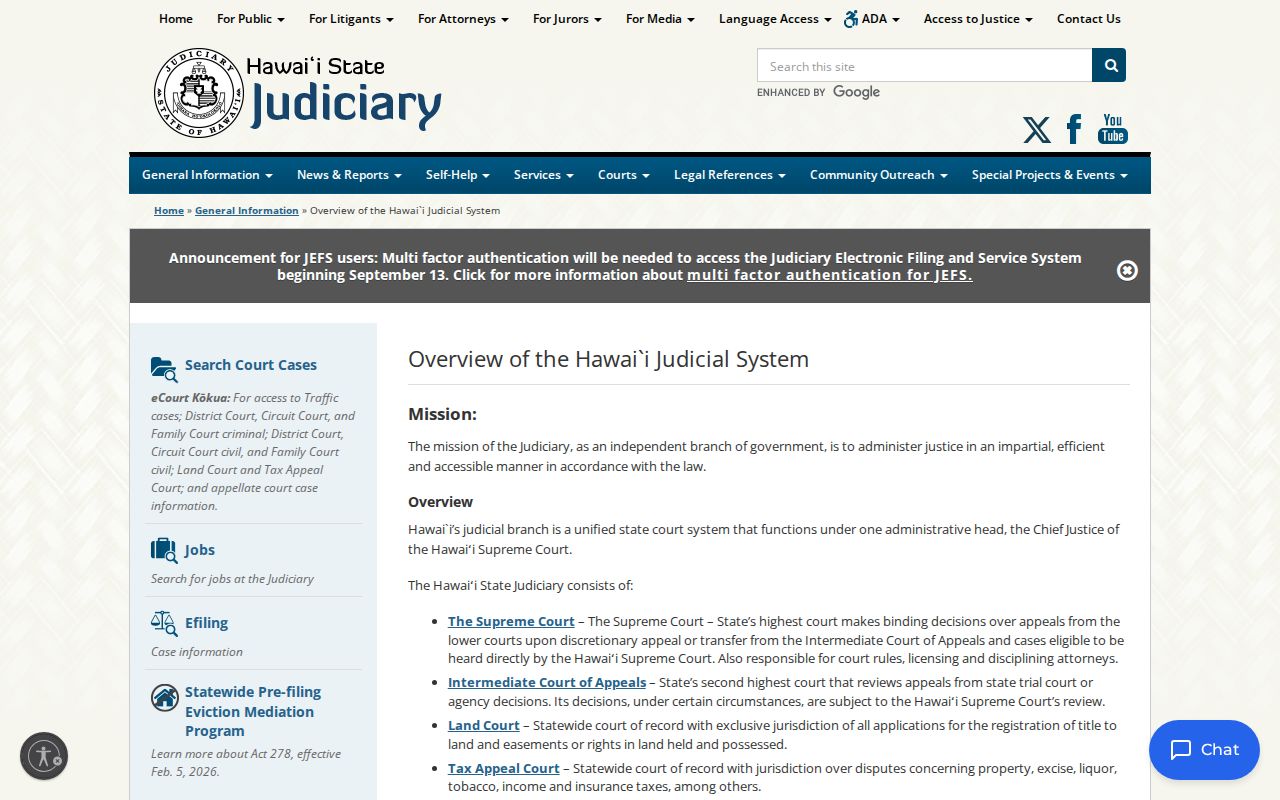
Maui County has no city governments and no municipal traffic courts. Every traffic matter there becomes a State of Hawaiʻi District Court record in the Second Circuit. That covers civil infractions and traffic crimes. Wailuku District Court sits at Hoapili Hale. Rural hearing locations operate in Lahaina, Hāna, Lānaʻi, and Molokaʻi. Drivers in Kahului, Kīhei, Wailuku, and Waiheʻe-Waiehu normally go through the Wailuku court. Lahaina keeps its own hearing site. The official Judiciary overview lays out where the District Court fits in the state court structure.
That one-court setup has a practical result. A Maui County citation is searched through statewide eCourt Kōkua, not through any county or city database.
eTraffic Pays, eCourt Shows
eTraffic Hawaiʻi handles money, not case histories. Its landing field takes a citation number, and it works only for a driver who admits responsibility on a citation that is payable without any appearance. For the docket itself, turn to eCourt Kōkua. That case-history portal can expose a Maui County traffic case's Summary, Events, Dockets, Offenses, and hearing information, and it is the right tool once payment is done or a hearing is set.
| Tool | Main task | Useful result |
|---|---|---|
| eTraffic | Pay a qualifying citation | Payment total and processing fee |
| eCourt Kōkua | Search the court case | Status, events, docket, court date |
| District Court clerk | Resolve offline or mandatory matters | File guidance and copy request |
The two portals do different jobs, so pick the one that fits your situation. A driver who denies the citation, or who wants mitigation, should not lean on eTraffic as a docket search. That path runs through the answer instructions printed with the ticket instead.
Looking Up a Traffic Ticket
Grab the ticket first. The citation number printed on it is the key to any Maui County court docket search. It tells you which District Court location holds the case. Inside eCourt, Case Search accepts a Case ID or the citation number. Vehicle Search works from a plate plus state, or a VIN. Party Search needs a first and last name. Is a brand-new ticket missing? Entry can take 13 days or longer. Even then, the response clock keeps running during every one of those days. Do not assume silence buys extra time.
- Read the citation for its number, issuing place, and response date.
- Use eCourt for case history or eTraffic only for eligible payment.
- Try Party, Vehicle, or Case Search with the correct fields.
- Call the traffic clerk when the citation has not posted.
- Visit or write to the District Court counter if online routes fail.
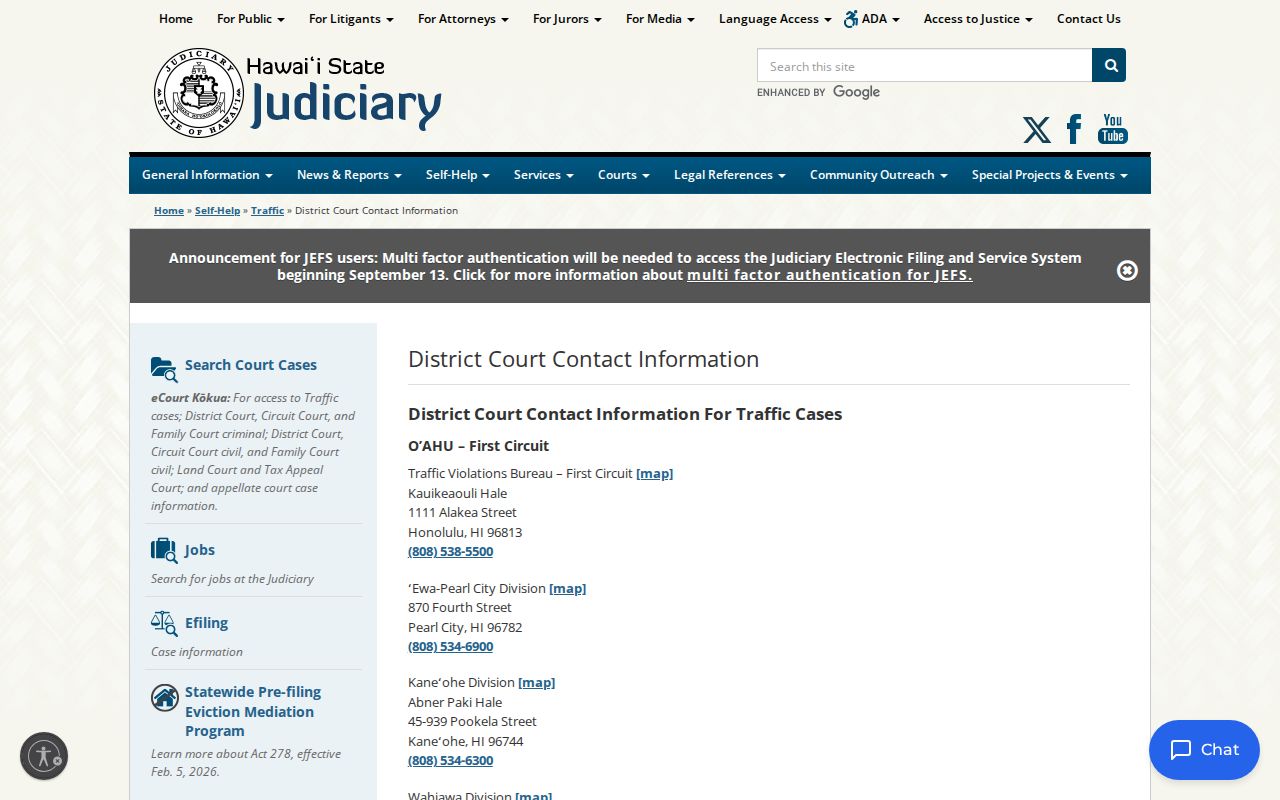
The official traffic court contact page supplies island and division contacts.
New citations sometimes fail the online docket search. Some tickets require a court appearance or simply cannot be paid online.
Maui County Traffic Search Fields
Maui County traffic cases can be pulled from eCourt a few different ways. Name Search offers filters. Use phonetic match, partial name, date, and case type. Vehicle Search takes a plate plus state. A VIN works too. Case Search shows fields for a Case ID or citation number, along with application, arrest, TCT, OTN, SID, and date controls. Hearing Search rounds it out: enter a public Case ID, or pick an island, location, courtroom, date range, and an optional time.
| Route | Fields | Limit |
|---|---|---|
| Vehicle | Plate, state, dates, type; or VIN | Plate or VIN minimum |
| Case | Case ID/citation, application, arrest, TCT, OTN, SID | Manual identifies Case ID minimum |
| Hearing by case | Case ID | Valid public ID |
| Hearing by place | Island, location, division, dates, time | Two-week public window |
Every Maui traffic Case ID opens with the Second Circuit digit, 2. Results display up to 200 at a time. Restricted matters stay out of view.
How to Find Your Traffic Court Date
Start with the citation itself. The appearance information is printed there. eCourt gives you a second check through its Upcoming Court Hearings Search. It runs by Case ID or by island and location. Inside the case, open the Events tab and read the entries newest first. Then compare the latest notice or order the court filed. Remember that a hearing listing can shift. The filed court notice is what controls in practice.
| Citation or Case ID | The search key, including a Maui ID beginning 2 |
|---|---|
| Court | District Court of the Second Circuit |
| Location | Wailuku or the assigned rural hearing site |
| Date and time | The current appearance or hearing setting |
| Status | Pending, decided, defaulted, paid, or another court state |
Want a fuller calendar check? Follow the Maui County court dates route. One caution: reminders are a convenience only, and a failed alert does not excuse you from appearing.
Maui County 21-Day Deadline
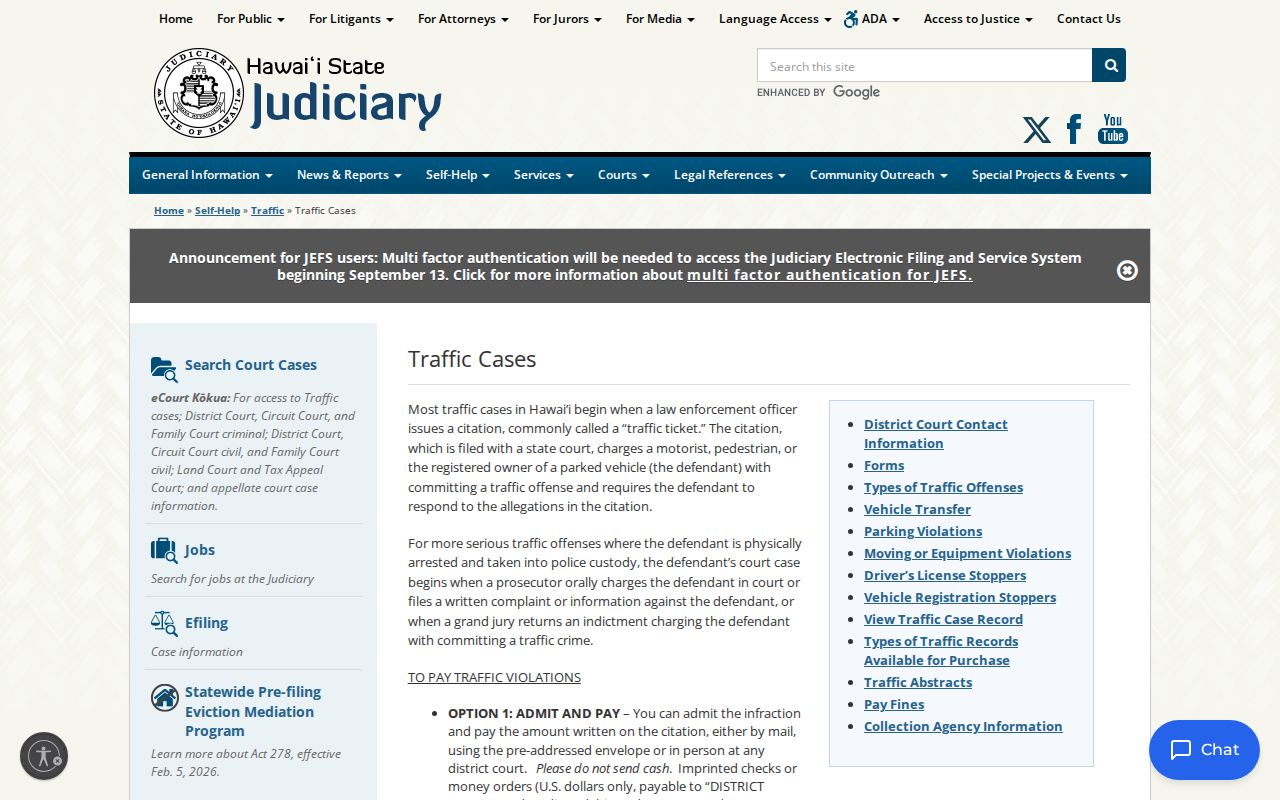
A traffic ticket in Maui County comes with a hard clock. HRS §291D-6 and Hawaiʻi Civil Traffic Rule 8 give you 21 calendar days from issuance to answer. A mailed answer must carry a postmark no later than day 21. Three responses exist. You can admit and pay. Deny, and fight it by written statement or hearing. Or admit while asking the judge to consider mitigation by statement or hearing. The court's official traffic case instructions spell out each option in full.
Check the official page whenever a ticket has not reached the court docket yet. Slow data entry never extends the answer period.
Use the citation instructions on time. Mail may go through the pre-addressed envelope, and an original response address should be confirmed rather than guessed from a conflicting old form.
Pay or Contest a Ticket
Your answer on a Maui County civil traffic docket sets the path. Admit and pay. The infraction closes without a hearing. Deny it. You get a written decision or the hearing you request. Admit with an explanation, and mitigation lets the judge weigh your side. At a contested hearing, the judge reads the officer's notes alongside your response. If the ruling goes for the state, expect fines, costs, and fees. Surcharges, community service, or driving school can follow.
| Pay | Deny | Mitigate |
|---|---|---|
| Admit and satisfy an eligible amount | Dispute the infraction by statement or hearing | Admit but ask the court to consider circumstances |
| eTraffic, phone, mail, or counter when eligible | Use the citation answer route | Use a statement or hearing request |
| No hearing for a payable civil infraction | Trial de novo may be requested within 30 days after an adverse decision | Mitigation ruling is final under this route |
Criminal traffic cases are different animals. Serious charges move under criminal procedure, with mandatory appearance rules that override the simple pay-by-mail route. Maui offers no automatic defensive-driving or deferred-disposition application, so never assume you qualify for either one.
When eTraffic Cannot Take Payment
Some traffic tickets fall outside eTraffic entirely. The system refuses a citation that has not been entered yet. It also balks at one being contested, one carrying a mitigation request, or one that requires a court appearance. Post-hearing amounts and tickets already in default judgment get refused too. Once the response period runs out, the routine online payment option goes away too.
Plenty of other ways to pay a payable Maui County traffic ticket remain. Mail works. So does a visit to the courthouse window. Etraffic or the phone line at 800-679-5949 handles the rest. Checks should name DISTRICT COURT as payee, and never send cash through the mail.
After the system matches your citation, it takes Visa, Mastercard, Discover, and American Express. It shows the processing fee before charging anything. A blank screen or error message means patience. Wait 24 hours and try again, since a second attempt too soon can double the charge. Two more things worth knowing: a dishonored payment costs a $25 fee. A failed online search does not pause the deadline on your citation.
Maui County Default Sequence
Skip your answer and a default judgment follows. A motion to set aside must come within 90 days. It must show good cause and include a cash appearance bond equal to the judgment. File later and the motion must explain exceptional circumstances for the first failure. It must also explain them for the delay. Posting the bond lifts a stopper while the motion is addressed.
Do not ignore a default. Nonpayment can lead to a license or registration stopper and later collection, while the District Court’s available payment route changes as the case advances.
Miss a Maui County traffic ticket deadline and a clock starts. Judgments of $500 or less can be referred to collection 90 days after default. Bigger judgments wait 180 days. After a referral, the court itself stops taking your money. The official collection instructions spell out what happens next.
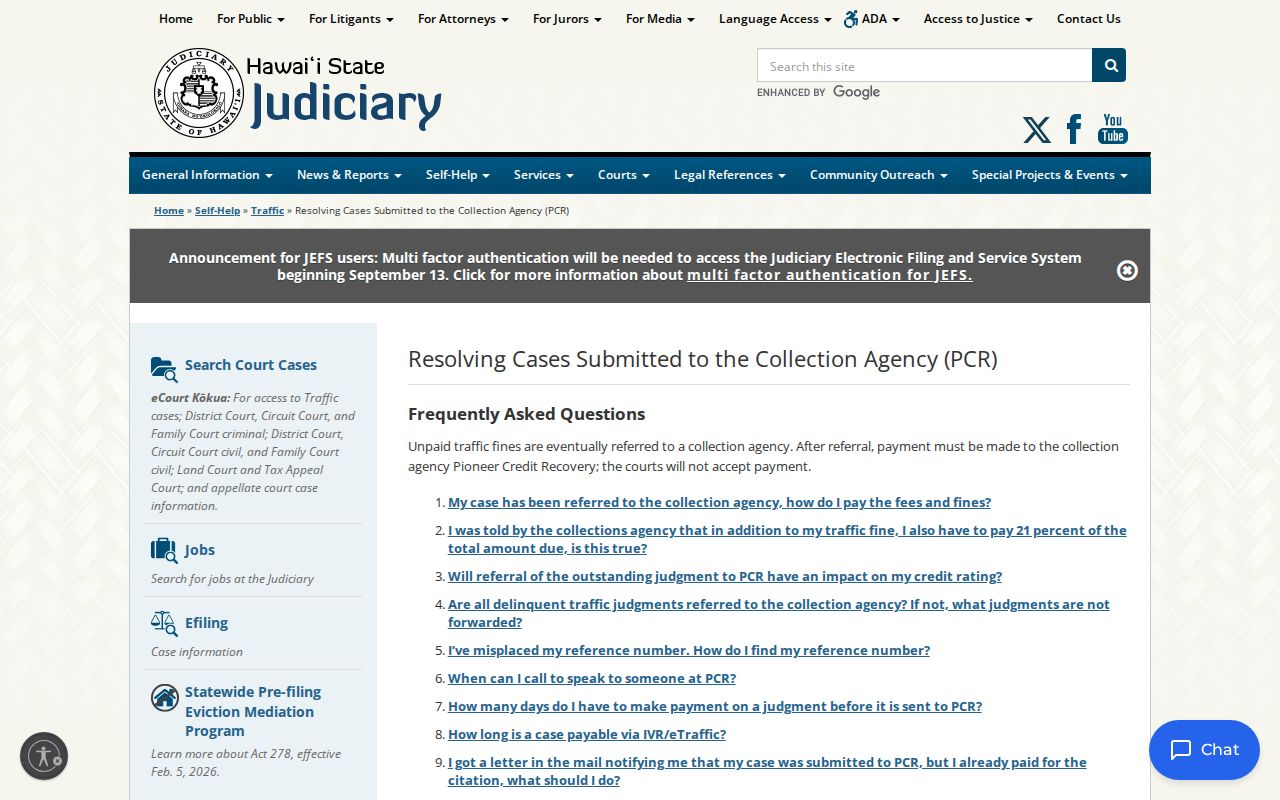
There is a financial reason to move fast. The collection page notes that Pioneer Credit Recovery tacks on a 21 percent charge, so contacting the court before referral saves real money.
Maui County Traffic Stopper Terms
Defaults on Maui County traffic cases can trigger two kinds of stoppers. A moving infraction left unpaid can bring a driver-license stopper. Unpaid parking obligations work differently, producing a vehicle-registration stopper instead. Beyond defaults, other failures can bring a license stopper. These include no response to a traffic-crime citation, a failure to appear, incomplete compliance with an order, or absence from a mandatory infraction hearing.
- License stopper
- A court-related block tied to unresolved qualifying traffic obligations.
- Registration stopper
- A block affecting vehicle registration, commonly linked to parking obligations.
- Default judgment
- A judgment entered after no timely answer.
- Appearance bond
- Cash equal to the judgment that accompanies a timely motion to set aside default.
The Judiciary’s stopper page explains the official process.
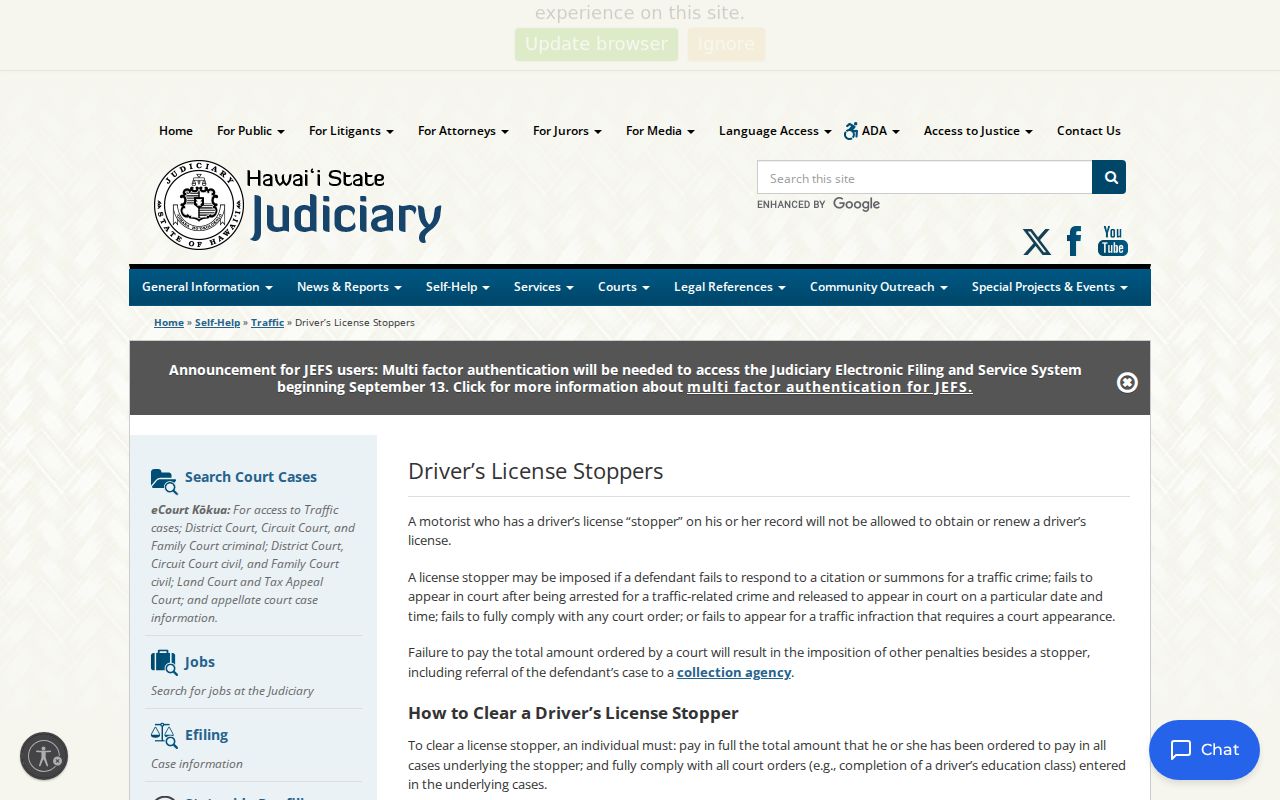
Clearing a stopper takes a separate administrative step, the instructions make clear, distinct from how the court case itself stands.
Traffic Court Record vs Driving Record
Two different documents often get confused here. The Second Circuit court docket is case-centered, tracking the citation, the offense, filed items, events, settings, judgment, financial status, and stopper indicators. A certified traffic abstract is something else. It summarizes alleged moving violations, resulting convictions, and administrative license revocations, and you buy it from District Court.
| Court traffic record | Certified traffic abstract | |
|---|---|---|
| Custodian | District Court clerk | District Court issuing the certified abstract |
| Focus | One case and its docket history | Person-centered statutory traffic summary |
| Access | eCourt, terminal, or clerk request | Purchase through District Court |
One caution about eCourt. Its display is expressly labeled reference information, not an official certified abstract. So order whichever record actually fits the task at hand.
Maui County Traffic Copy Fees
Looking at public eCourt information costs nothing. Want copies? A file-stamped online PDF runs $3 per document or ten cents per page, whichever is greater. Electronic certification adds $2, and anything you purchase stays retrievable for two days. No online PDF? Inspect the traffic record at the Hoapili Hale terminal. Or request it from the District Court clerk.
| Item | Fee | Notes |
|---|---|---|
| eCourt docket search | Free | Reference case data |
| Regular online PDF | $3 or $0.10/page, whichever is greater | File-stamped document |
| Electronic certification | $2 extra | Per document |
| Paper copy | $1 first page; $0.50 each added page | Second Circuit schedule |
Need help in person? The Wailuku Traffic Violations Bureau sits in Hoapili Hale, Suite 137, at 2145 Main Street, Wailuku, HI 96793, phone 808-244-2800. Files older than five years may be stored off site. Call first.