
Searching the Kīhei Court Docket
Begin at eCourt Kōkua, accept the disclaimer, and finish the reCAPTCHA if one appears. Party Search wants a first and last name for a person. A business name works for an entity. Phonetic and partial controls widen a match when the spelling is uncertain. Case Search runs on the JIMS identifier. Vehicle Search takes a plate and state or a VIN. Upcoming Court Hearings accepts a case ID or a Wailuku location, courtroom, date range, and time.
- Choose the route that matches the information in hand.
- Select the actual state court, case type, and Wailuku location.
- Compare filing date and party role before opening a similar name.
- Read Summary, Parties, Events, and Dockets, plus Offenses when shown.
- Confirm a setting against the newest filed notice or order.
A filing-date docket search caps out at 60 days. Each batch returns up to 200 results. Searching and reading the event list cost nothing, though some document images carry a fee.
Kīhei Is a CDP
The 2020 Census counted 21,423 residents in Kīhei. To the Census, it is a CDP rather than an incorporated municipality. Numbers alone do not create a city court. Nor do they create a city clerk or a Kīhei case database. The dated community count comes straight from the official Census geography source.
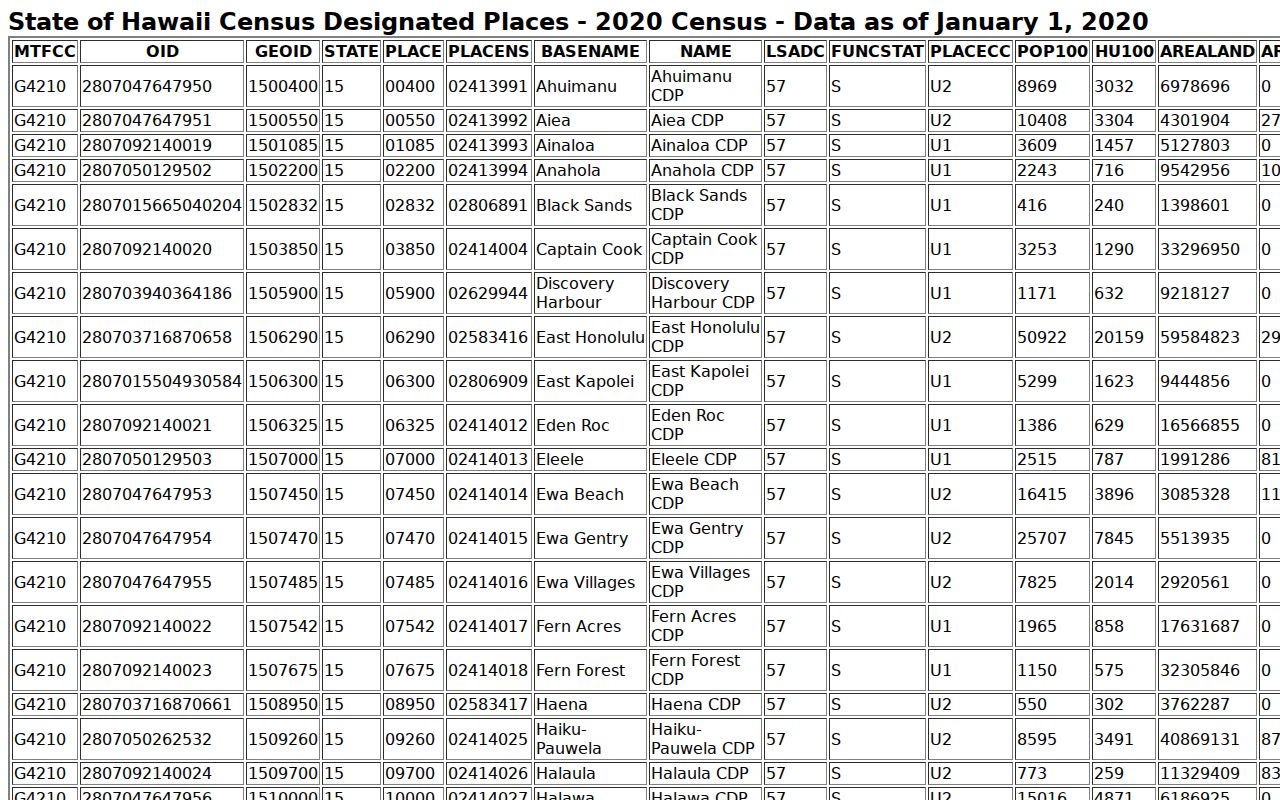
That geography point is the whole story here, not any current population estimate. Jurisdiction flows from state law and case type. So Kīhei users generally take the Wailuku route to Hoapili Hale, where the Second Circuit keeps the District, Circuit, Family, traffic, and records functions that matter.
Kīhei Municipal Court Basics
There is no Kīhei Municipal Court. People search the phrase anyway. The honest answer is that Maui County simply has no municipal court layer. District Court takes traffic, misdemeanors, landlord-tenant matters, small claims, and limited civil disputes. Felonies, every jury trial, probate, guardianship, and larger civil disputes sit with Circuit Court. Family Court covers domestic and children’s matters.
| Kīhei matter | Actual state court | Record route |
|---|---|---|
| Citation or misdemeanor | District Court, Second Circuit | eCourt and Wailuku clerks |
| Felony or jury matter | Circuit Court, Second Circuit | eCourt and Legal Documents |
| Small claim or tenancy | District Court, Second Circuit | eCourt and District clerks |
| Domestic or child matter | Family Court | Authorized access when restricted |
The caption, citation, or filed notice tells you the real court. When the record says Wailuku, don’t substitute Kīhei as the location.
Kīhei Outreach Was Not Municipal
On August 26, 2022, the Second Circuit District Court and justice partners launched Maui Community Outreach Court. Its first home was Kīhei Public Library. It moved to Hoapili Hale in March 2023. That problem-solving program had a limited scope. It was never a general Kīhei municipal court. Nor was it the routine spot to fight a traffic ticket or file a civil claim.
The history matters because an old notice or news item may still name the library. A current Kīhei docket belongs to the assigned Second Circuit court regardless. Check the latest event and location. Don’t treat an earlier outreach venue as a courthouse. The ordinary public counter stays in Wailuku.
Myth corrected: A court program once meeting in Kīhei did not establish a Kīhei city court or a separate docket database.
Court Dates and Settings in Kīhei
Upcoming Court Hearings is the statewide public calendar. A case ID is the cleanest search key. Without one, pick the island, the Wailuku location, a courtroom or division, beginning and ending dates, and an optional calendar time. Results link back to the case and offer Printable View, though the portal warns that settings can shift.
| Case ID | The statewide identifier tying a setting to one public case. |
|---|---|
| Location | Usually Wailuku for Kīhei users, unless the notice assigns another site. |
| Division | The courtroom or calendar needed for a place search. |
| Event | Arraignment, hearing, motion, pretrial, trial, or sentencing. |
| Date and time | The current public setting, subject to later reset or order. |
Events list newest first. CHD signals a date change and CON a continuance. Read past those older entries to the later setting, then check the filed notice.
Kīhei Settings After Disruption
Storms can scramble travel and court operations alike. On March 12, 2026, the Judiciary announced Maui County courts would close March 13, with hearings and trials on Maui, Molokaʻi, and Lānaʻi set for rescheduling. The release pointed users to eCourt for current hearing and case activity. The official closure notice shows why a fresh docket check matters.
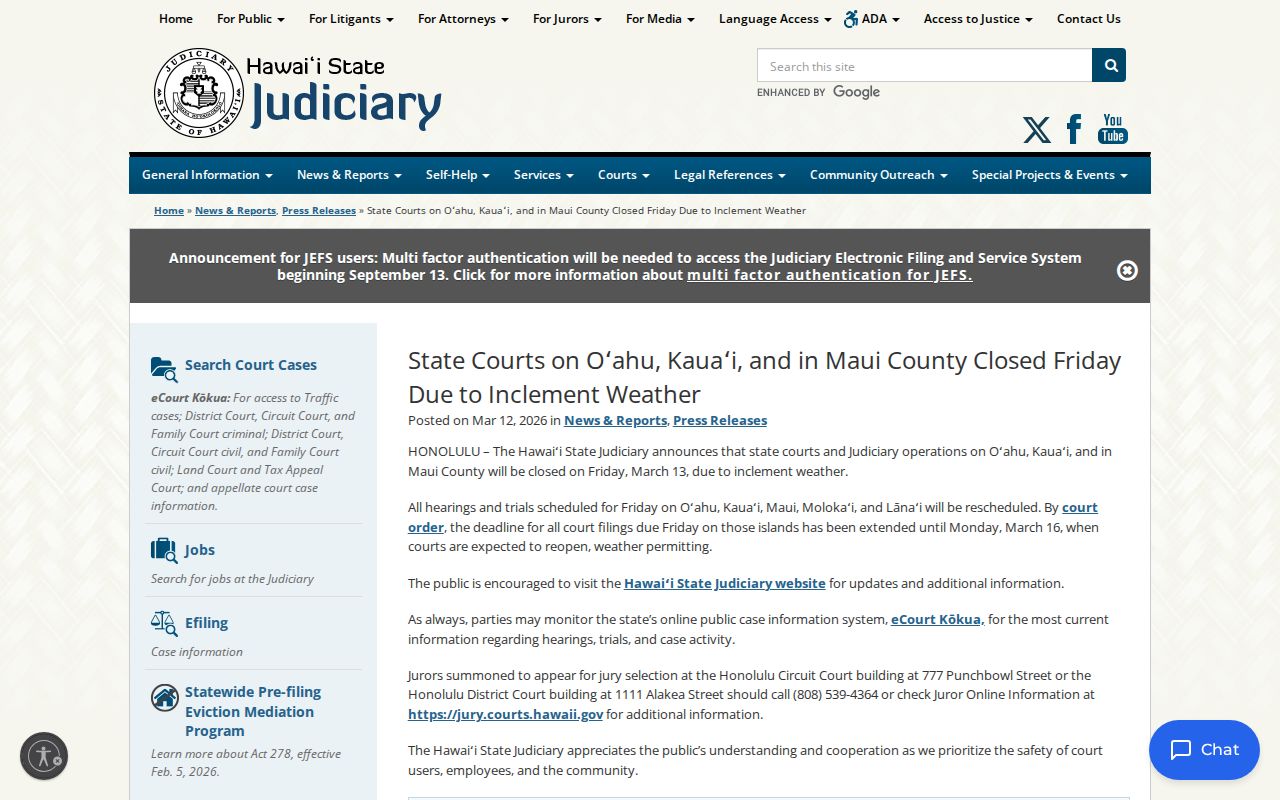
A saved calendar or old reminder proves nothing about the new date. Read the newest Events entry. Open the latest notice or order, watch for current Judiciary alerts, and call the proper clerk if sources disagree.
Traffic Tickets in Kīhei
Answer a Kīhei citation within 21 calendar days. Mail must be postmarked by day 21. You can admit and pay, deny by statement or hearing, or admit with mitigation. eTraffic accepts only qualifying citations from someone admitting responsibility. A ticket may take 13 days or more to enter the system. That delay never extends the deadline.
If eTraffic won’t take the response, use the mail or in-person options printed on the citation. Online payment is off the table for a mandatory appearance, a contested citation, mitigation, a post-hearing sum, a default judgment, or a ticket not yet entered. Traffic questions go to 808-244-2800. District clerk questions go to 808-244-2846.
Kīhei Vehicle Search and Stops
Traffic records work differently across the state's search tools. eCourt lets you look up a traffic matter by license plate and state, by VIN, or with date and case-type filters. Case Search takes a case ID or citation plus other official identifiers. eTraffic sits apart. It starts from a citation number. It exists to take payment, not to review a case history.
Ignoring a ticket invites real trouble. Default can enter. Undoing it takes a timely motion to set aside with its own requirements. Unpaid amounts can trigger a license stopper; parking matters can trigger a registration stopper. Later collection may add a 21 percent charge under the documented sequence. So don't wait for an online ticket to appear.
- License stopper
- A hold tied to eligible unpaid moving matters.
- Registration stopper
- A hold tied to eligible parking matters.
- eCourt
- The case-history, docket, and hearing system.
- eTraffic
- The narrower payment portal for an eligible citation.
Where Kīhei Cases Go
Kīhei legal matters never pass through a municipal court first. There is no city-level step that later rises to a Maui County court. Instead, each case opens in the right State of Hawaiʻi trial court. The Second Circuit holds District, Circuit, and Family Court divisions. Those divisions handle the work. Appeals move up to the Intermediate Court of Appeals. Cases that qualify for further review or transfer can reach the Hawaiʻi Supreme Court.
Actual docket flow: Kīhei event › Second Circuit District, Circuit, or Family Court › Intermediate Court of Appeals › Hawaiʻi Supreme Court when applicable
What matters is the subject and the jurisdiction, not the CDP address on a filing. The Maui County court docket overview maps each court in the circuit and the public search routes for its records.
Kīhei Has No Caseload Column
The FY2024 Judiciary tables track the Second Circuit as a whole. No Kīhei column appears in them. District Court reported a total workload of 101,903 cases, a figure that blends civil, criminal, traffic, and other violations from Maui, Molokaʻi, and Lānaʻi alike. The same report counts 15,479 new civil traffic infractions and 2,991 traffic crimes. Neither of those totals belongs to Kīhei alone.
The figures measure a shared court system's scale. They say nothing about where in the circuit an event took place, how many Kīhei residents took part, or how a case ended. Any city-level claim built on these numbers would simply be invented.
Kīhei Records: Terminal or PDF
eCourt marks public images you can buy online with a PDF icon. A file-stamped PDF runs $3 per document or ten cents per page, whichever is greater. Want it certified? Add $2. Each purchase stays retrievable for two days with the emailed Purchase ID. One caution: no icon does not mean the document is sealed.
Prefer to work at the courthouse? Hoapili Hale public terminals let you review files on screen at no charge. Copies cost money, though. Legal Documents at 808-244-2969 handles nonconfidential Circuit copies and older files. Because files more than five years old may sit off site, call before you travel. Form 2D-P-332 covers requests for paper, microfilm, certified, or otherwise unavailable material. Want the authority behind a clerk's certification? The official HRS §606-3 clerk certification source spells out the seal's legal basis.
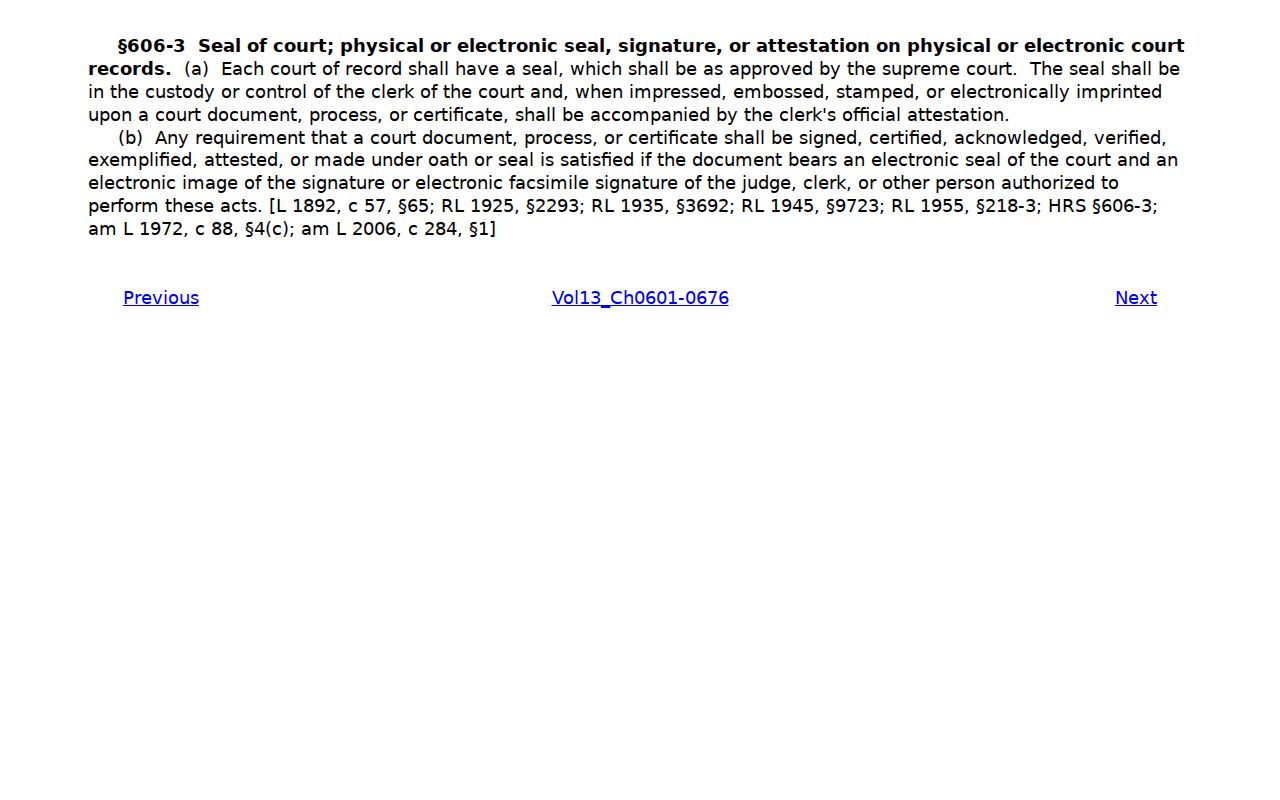
A certified Kīhei court record carries the clerk's seal. The public portal display helps with research, but it is no substitute for a certified copy.
Kīhei Court Record Access Rules
Public access to Kīhei case records follows the Hawaiʻi Court Records Rules. Under Rule 10, records are open during business hours unless a law, rule, or order restricts them. You can ask orally, in writing, or electronically. Name the party, the known case number, the case type, and the filing court. Rule 9 shields protected personal and account data from public filings.
Not everything reaches the screen. Confidential, juvenile, and sealed cases never appear on eCourt. Sealed or in-camera items inside a visible case are masked. Juvenile and adoption matters carry their own statutory limits. Keep in mind that a missing image can still be public through the clerk. An unscanned document is not the same as a sealed one. The Judiciary's news and reports page posts operational and reform notices. Those can affect how records are accessed.
Operational news adds context to the Kīhei docket, but it cannot replace a filed order. Check the individual record with the originating clerk before you rely on it.
Kīhei Federal Records Stay Separate
Federal matters never land in a Second Circuit docket. If a case tied to Kīhei was filed in federal court, Honolulu is where it lives. The U.S. District Court for the District of Hawaii handles it there. Filings run through CM/ECF. PACER gives registered users public docket access. Bankruptcy is its own system, run by the U.S. Bankruptcy Court. The District of Hawaii CM/ECF information page spells out how the federal side works.
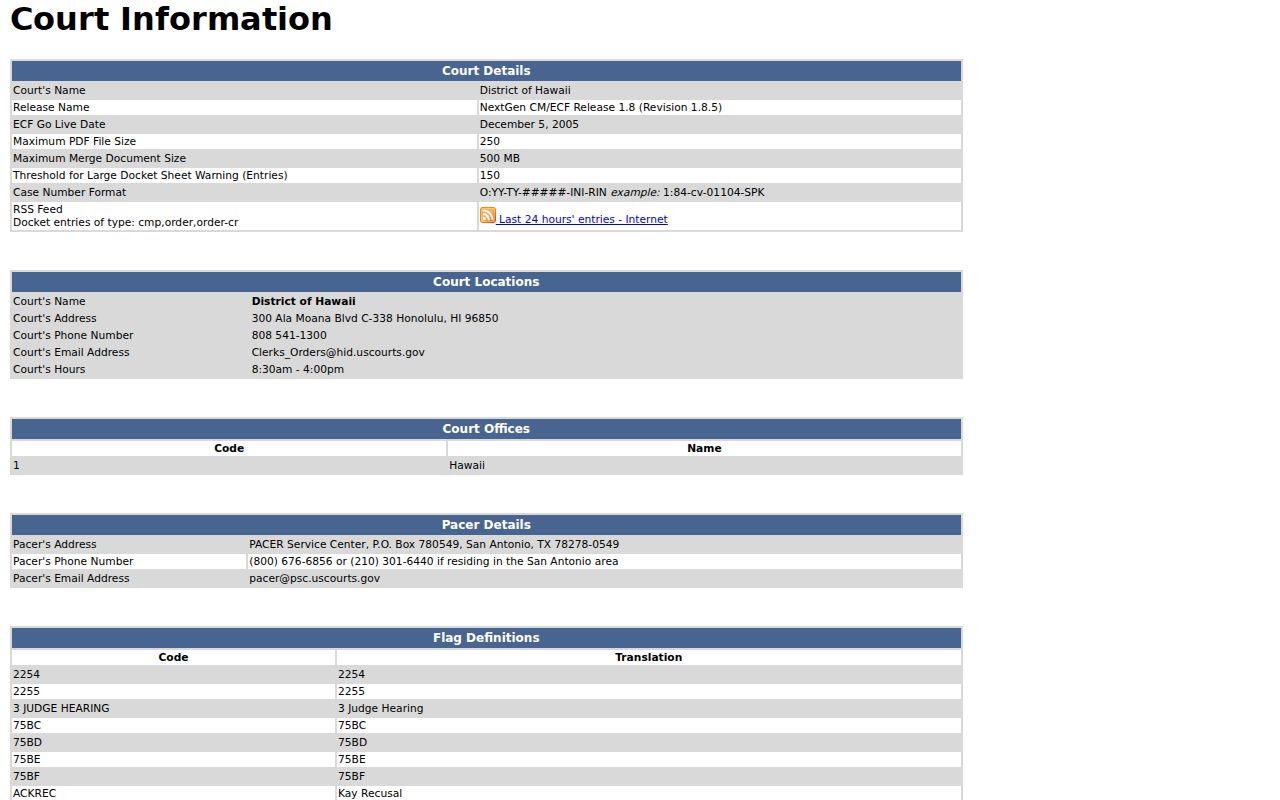
Treat this as a comparison route, not another Kīhei court. State citations and Second Circuit cases stay in eCourt Kōkua. Federal civil and criminal dockets belong to PACER and the federal clerk.
Kīhei Record Verification Matrix
A Kīhei search stays accurate when each task runs through the right state channel. These Kīhei checks tie the community reference back to the Wailuku court record.
| Kīhei task | Kīhei online check | Kīhei confirmation |
|---|---|---|
| Kīhei party name | Search eCourt parties | Confirm the Kīhei filing date |
| Kīhei business name | Use entity search | Check the Kīhei party role |
| Kīhei case ID | Open Case Search | Confirm the Kīhei court type |
| Kīhei old number | Convert to JIMS format | Verify the Kīhei sequence |
| Kīhei hearing | Filter Wailuku calendars | Read the Kīhei filed notice |
| Kīhei reset | Read newest Events | Call the Kīhei case clerk |
| Kīhei citation | Check eCourt history | Follow Kīhei citation terms |
| Kīhei payment | Use eTraffic if eligible | Keep the Kīhei receipt |
| Kīhei vehicle | Search plate or VIN | Match the Kīhei citation |
| Kīhei public PDF | Look for the icon | Match the Kīhei docket entry |
| Kīhei certified copy | Select certification | Name the Kīhei document |
| Kīhei old file | Call Legal Documents | Ask about Kīhei off-site records |
| Kīhei terminal view | Use Hoapili Hale | Bring the Kīhei case ID |
| Kīhei restricted case | Review access authority | Follow the Kīhei court order |
| Kīhei remote hearing | Read the approved notice | Confirm the Kīhei event mode |
Geography alone never replaces the state court name. A Kīhei result is sound only when the case ID, the court, and the newest event all agree.
Kīhei Search Precision
When you run a Kīhei docket search, precise details do the work: exact names, filing dates, and case numbers pull up the right court records. Close matches get settled by Kīhei notices and a Kīhei clerk confirmation.