
Searching Maui County Criminal Dockets
Start with eCourt Kōkua. It is the state system that hosts the Maui County criminal court docket. Accept the disclaimer first. Clear reCAPTCHA when it appears. Then pick Party Search, Case Search, Filing Date, or Upcoming Court Hearings. A name search needs both a first and last name. Phonetic and partial matching widens the net. Case type plus filing date helps sort out people with similar names. Maui case IDs start with circuit digit 2. The filing-date route caps each search at 60 days. It returns up to 200 results per batch. Nothing here costs money. When the online record runs thin, the clerk’s other access routes fill the gap.
- Search a party name or public case ID and select the criminal case type.
- Confirm the court, filing date, party role, and Maui location before opening a result.
- Read Summary, Case Parties, Offenses, Events, and Dockets, checking the newest event first.
- Call Legal Documents at 808-244-2969 for Circuit matters or District clerks at 808-244-2846 for District matters.
- Use a Hoapili Hale public terminal or Form 2D-P-332 when a public document lacks an online image.
Maui Criminal Case IDs
Old Second Circuit numbers sometimes fail because eCourt relies on a compact JIMS format. A legacy felony ID like FCCR-15-1-1234 becomes 2FC151001234. The first digit names the circuit. Court and case-type characters follow. Then come a two-digit year and a seven-digit sequence. Leading zeroes in that last segment can drop away. Convert the number wrong and a public case may look sealed when it is not.
No result does not prove secrecy. Check old-number conversion, spelling, case type, date range, and court before asking the correct clerk whether access is restricted.
Inside a Maui County Criminal Docket
The public case view breaks the record into tabs. Summary identifies the case and can carry bail or bond details. Case Parties names each person and their role. Events lists completed and future settings in reverse order, while Dockets works as a running index of filings, minutes, and court action. Offenses holds the charge information in criminal cases. A PDF icon means the image can be purchased online, though not every public filing carries one.
| Case ID | Statewide JIMS number, with Maui matters beginning with circuit digit 2. |
|---|---|
| Status | System state, filing date, and last-updated date; inactive need not mean finally closed. |
| Parties | Sequence, role, ID, names or aliases, and attorney-client associations. |
| Events | Past and future settings, dispositions, courtroom details, and latest entry first. |
| Dockets | Minutes and filings, with purchase icons where an image is offered. |
| Offenses | Charge information found only in the criminal case model. |
Maui Criminal Codes in Plain Terms
Hawaiʻi posts an official JIMS and TRAVIS code glossary for exactly this problem. A short event code can be mistaken for a final result without it.
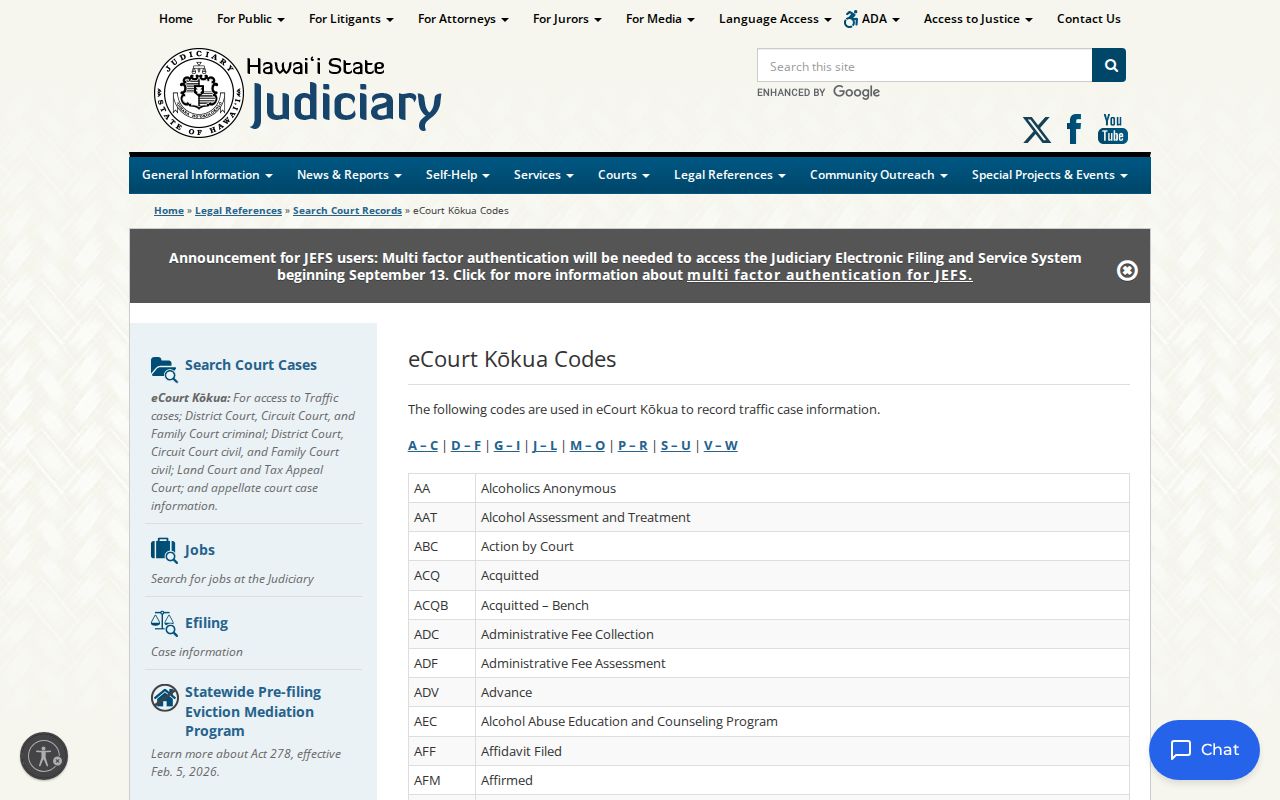
Always pair a code with its date and full text. AP is arraignment and plea. DCRF and DCRM signal felony and misdemeanor complaints. BBP means bail bond posted. BWT and BWRC mark a bench warrant created and recalled. CHD changes a date. CON continues a case. JOC is judgment of conviction, and SEN is sentencing. DAG or DNC means deferred acceptance of a guilty or no-contest plea. That is not automatic diversion.
- ACQ or FNG
- Acquittal or a not-guilty finding.
- NP or DNP
- Nolle prosequi or dismissal on that basis.
- DPJ or DWO
- Dismissal with prejudice or without prejudice.
- OSEL
- An order marked sealed and confidential.
How a Maui Criminal Case Moves
A docket is a timeline, not a verdict summary. The path often opens with a DCRF felony or DCRM misdemeanor complaint. AP records arraignment and plea. From there come bond, warrant, motion, notice, hearing, and reset entries. A case might end in a plea. Or it could close with a bench or jury trial, dismissal, acquittal, conviction, sentence, or appeal. Stages repeat. An old continuance stays in the history even after a new setting appears.
Docket flow: Complaint › Arraignment › Pretrial events › Plea or trial › Disposition › Sentencing or appeal
The latest event offers the best current context. Check it against the newest filed notice or order, particularly when an older CHD or CON sits on the record. The Maui County court dates resource covers the hearing-search detail.
Maui Criminal Docket Reminders
The Judiciary’s eReminder service shows the alert schedule available for eligible court events.
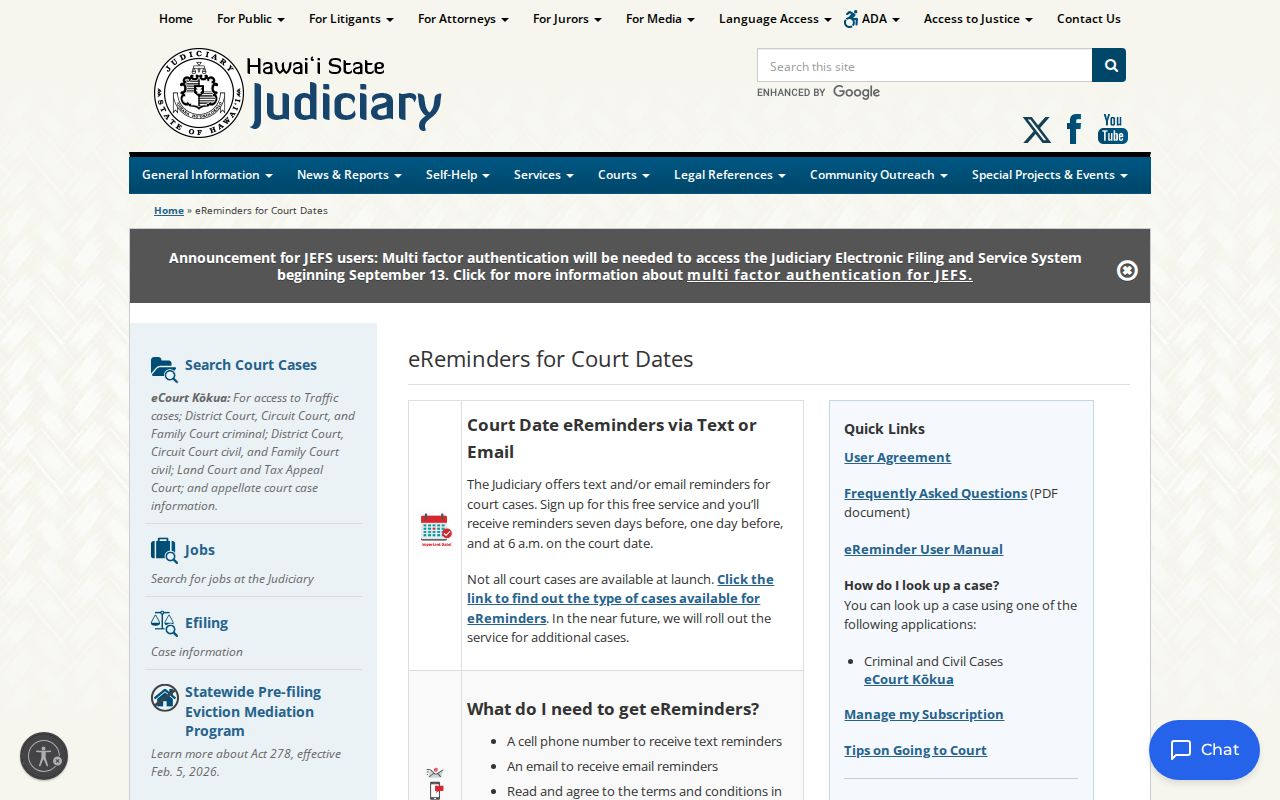
Alerts go out seven days before and one day before the hearing. Another arrives at 6 a.m. on the hearing date. A reset can trigger its own new-date alert. Remember that a reminder is a convenience. It is never a filed notice or court order. Missing one does not excuse attendance. So confirm the newest Events entry and the controlling notice yourself.
Courts That Hold Criminal Dockets
Maui County has no municipal criminal court and no elected county clerk of court. The Circuit Court of the Second Circuit owns exclusive felony jurisdiction. It runs every jury trial. The District Court of the Second Circuit takes misdemeanors punishable by no more than one year. It also handles ordinance matters and criminal traffic cases. Family Court handles the criminal matters within its subject jurisdiction, though access limits often apply.
| Court | Criminal work | Record route |
|---|---|---|
| Circuit Court | Felonies and every jury trial | Legal Documents at Hoapili Hale |
| District Court | Misdemeanors, ordinance cases, criminal traffic | Second Circuit District clerks |
| Family Court | Family-subject criminal cases | Family clerks for authorized access |
Lahaina, Hāna, Molokaʻi, and Lānaʻi serve as hearing sites inside the same state system. None runs a separate county database. Hoapili Hale manages Second Circuit files centrally, including cases heard at the rural sites.
Remote Maui Criminal Hearings
The Judiciary’s remote hearing page directs users to circuit instructions.
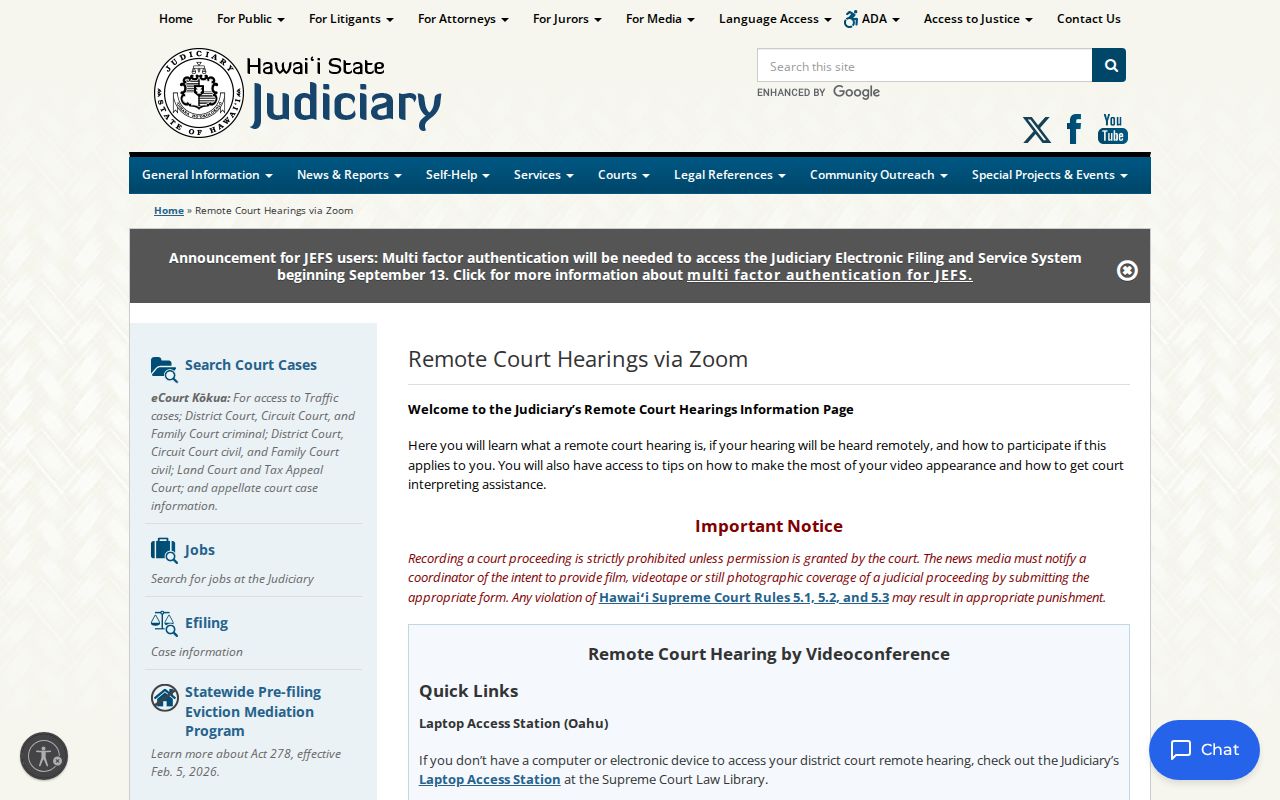
Second Circuit instructions allow many nonevidentiary criminal hearings to proceed remotely, with trials and evidentiary hearings as the exceptions. A meeting number alone does not permit an online appearance. The filed notice, the order, and any court-approved request control how a specific event actually proceeds.
Maui Criminal Workload Context
FY2024 figures span the entire Second Circuit, including Maui, Molokaʻi, and Lānaʻi. They show 685 new criminal filings and 43 reopened cases. The full workload hit 4,303 cases. The year closed with 3,318 matters pending. None of these totals belongs to a single town or courthouse.
The annual report splits pending matters with recent activity from those without it and cautions that disposition coding is still being refined. So raw columns should not become a conviction or clearance rate. The figures describe workload only, never the result of any person’s case.
Sealed Dockets and Public Access
Under the Hawaiʻi Court Records Rules, court records stay open during business hours. An exception needs a law, rule, or court order. Even so, openness has limits. Juvenile dockets are withheld. Confidential cases never appear in eCourt. Sealed or in-camera items inside a visible case are masked, and private identifiers get suppressed.
A dismissal is one thing; getting records removed is another. The official HRS §831-3.2 expungement provision spells out the statutory route. It shows how a qualifying order can take covered information out of the public Judiciary databases.
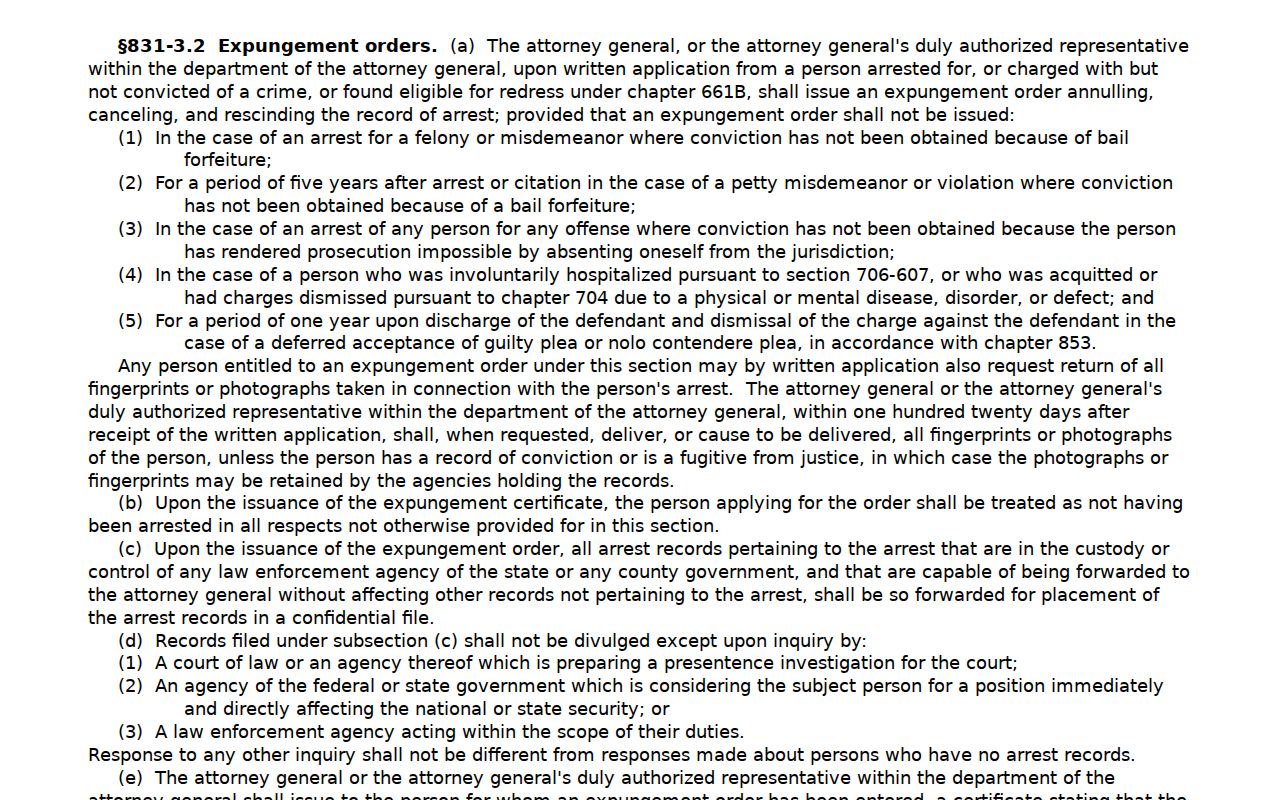
Dismissal by itself does not wipe a Maui County criminal docket entry. Removal takes statutory conditions plus a proper order. One more caution: a missing PDF icon does not prove sealing, because the filing may still be public at the clerk's counter or through a simple request.
Key access rules: HCRR Rules 9 and 10 govern redaction, requests, and restricted material. HRS §571-84 withholds covered juvenile records. Formal proof requires the clerk-certified item.
Maui Criminal Docket Verification
A public screen is a fine way to track a Maui County case. It is not certified proof. Before you rely on an entry, check the basics. Compare the case number, the court, the filing date, and the most recent event. When an agency or another court needs formal evidence, go to the clerk. Ask for a certified copy. That final step also catches stale data, mistaken names, and any later order that changed an earlier setting.